Restaurant Fire Suppression Systems
Protect your cooking equipment, hoods and ducts with proven wet-chemical systems installed by specialists.
Mandatory Safety Equipment
Commercial kitchen fire suppression systems are a legal requirement for most UK kitchens. This applies especially to operations using solid fuel equipment, deep fat fryers, or high-volume cooking. Beyond compliance, these systems protect your staff, customers, property and business continuity.
Most insurers mandate annual servicing by certified technicians, with many requiring six-monthly inspections. Failing to maintain your system correctly can void your insurance and lead to enforcement action by fire authorities.
How It Protects
Three-Stage Protection Process
Wet-chemical fire suppression systems deliver rapid, effective fire control through a scientifically proven three-stage suppression mechanism.
Flame Knockdown
The moment the system activates, wet-chemical agent discharges through precisely positioned nozzles directly onto the fire source. This immediate burst rapidly knocks down visible flames and halts the fire.
Surface Cooling
The wet-chemical agent rapidly cools burning cooking oils and fats below their reignition temperature. This prevents the fire from re-establishing, even while the oil remains hot.
Vapour-Securing Blanket
As the agent reacts with hot cooking oils, it forms a foam blanket across the fuel surface. This barrier cuts off the oxygen supply, preventing reflash and providing sustained suppression.
Automatic Activation & Equipment Shutdown
Heat sensors above cooking equipment trigger the system automatically when temperatures exceed safe levels. Within seconds, gas valves and electrical supplies to cooking equipment shut down — removing any energy source that could sustain or reignite the fire. No human intervention is needed.
Protected Areas
Comprehensive Kitchen Coverage
Fire suppression systems are engineered to protect all high-risk cooking equipment and the complete extraction pathway where grease accumulates.
Cooking Appliances
- Deep fat fryers (open and pressure)
- Griddles and flat-top ranges
- Open flame range tops
- Char-broilers and chargrills
- Wok ranges and high-heat Asian cooking equipment
- Solid fuel cooking appliances
Extraction & Ventilation
- Extraction hoods and canopies
- Grease ductwork and horizontal runs
- Plenum chambers
- Grease extraction devices and filters
- Vertical duct risers
- Extract fan housings
Tailored Protection Zones
Every commercial kitchen is different. We design protection zones matched precisely to your cooking equipment layout, positioning discharge nozzles to cover appliance surfaces and extraction hoods — ensuring complete fire control wherever ignition occurs.
We calculate suppressant volumes from your actual equipment dimensions, fuel types, and heat outputs — not generic templates. This approach delivers the right level of protection without over-specifying and adding unnecessary cost.
Design & Installation
Complete Service Process
From initial assessment through to staff training, we manage every aspect of your fire suppression system installation with minimal disruption to operations.
Initial Site Survey
We assess your kitchen layout, cooking equipment positioning, and extraction system configuration in detail. Our specialists identify every appliance that needs protection, take measurements, and assess structural requirements before any work begins.
Custom System Design
We engineer a bespoke fire suppression solution matched precisely to your kitchen. This covers suppressant volumes, heat sensor placement, discharge nozzle positioning, appliance interlocks, and full compliance with British Standards and your insurer's requirements.
Installation
We schedule all installations during off-peak hours or closure periods to avoid disrupting service. Our qualified technicians fit control panels, suppressant cylinders, detection equipment, discharge piping, gas and electrical interlocks, and manual activation devices — all to manufacturer specifications.
System Commissioning
Once installed, we run comprehensive commissioning tests. We verify nozzle coverage, test heat sensor sensitivity, confirm interlock operation, and document all system parameters. Full test certificates are issued on completion.
Staff Handover Training
We deliver on-site training for your kitchen management and staff. This covers how the system works, manual activation, what to do when the system fires, routine visual checks, and who to call for servicing. Training certificates and full system documentation are included.
Complete Documentation Package
On completion, you receive full system documentation: installation certificates, system schematics, equipment manuals, maintenance schedules, emergency procedures, and staff training records. Everything you need to satisfy your insurer and support future servicing visits.
Inspection & Servicing
Ongoing Maintenance Requirements
Regular professional servicing ensures your fire suppression system remains reliable, compliant, and ready to protect your business when needed.
UK regulations require annual inspection and servicing by a competent person. Many insurers go further, specifying six-monthly inspections — particularly for high-volume or 24/7 kitchens.
Every maintenance visit includes a full system check: suppressant cylinder pressure, discharge nozzle condition, heat sensor sensitivity, manual activation, and gas and electrical interlock operation. We document all findings and issue certificates on the day.
We keep detailed service histories for every system and send advance reminders before servicing is due. You never miss a compliance deadline, and your insurance cover stays valid.
Integration with PPM Schedules
Fire suppression servicing integrates seamlessly with planned preventive maintenance (PPM) programmes for your cooking and extraction equipment. We coordinate service visits to maximise efficiency, conducting multiple inspections during single site visits where appropriate, reducing disruption and administrative overhead.
View Maintenance Plans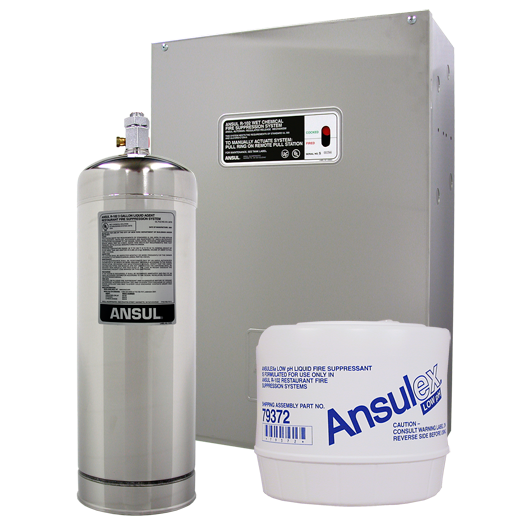
Minimum servicing frequency
Recommended for high-volume kitchens
Common Questions
Fire Suppression System FAQs
Answers to frequently asked questions about fire suppression installation, maintenance and compliance requirements.
Annual servicing is the legal minimum in the UK. However, many insurers and fire risk assessments require six-monthly inspections, especially for high-volume operations. We offer flexible servicing frequencies to meet your compliance obligations. Full documentation is provided after every visit.
Related Services
Keep the whole kitchen protected
Fire suppression works best alongside gas safety, extraction cleaning and planned maintenance.
Book a Fire Suppression Survey
Our specialists survey your kitchen, design a bespoke system, and handle the full installation. We protect your staff, customers, and business — and keep your cover valid.
Free, no-obligation site assessments with detailed quotations